One designer for every page on the business site.
I built the pages for Vodafone's business products, the new ones and the ones that needed bringing up to date.
- Role
- UX Designer
- Timeline
- Two years, 2020–2022
- Team
- Six on the VOIS web team in Budapest, with me as the only designer
- For
- Vodafone Business product managers in the UK
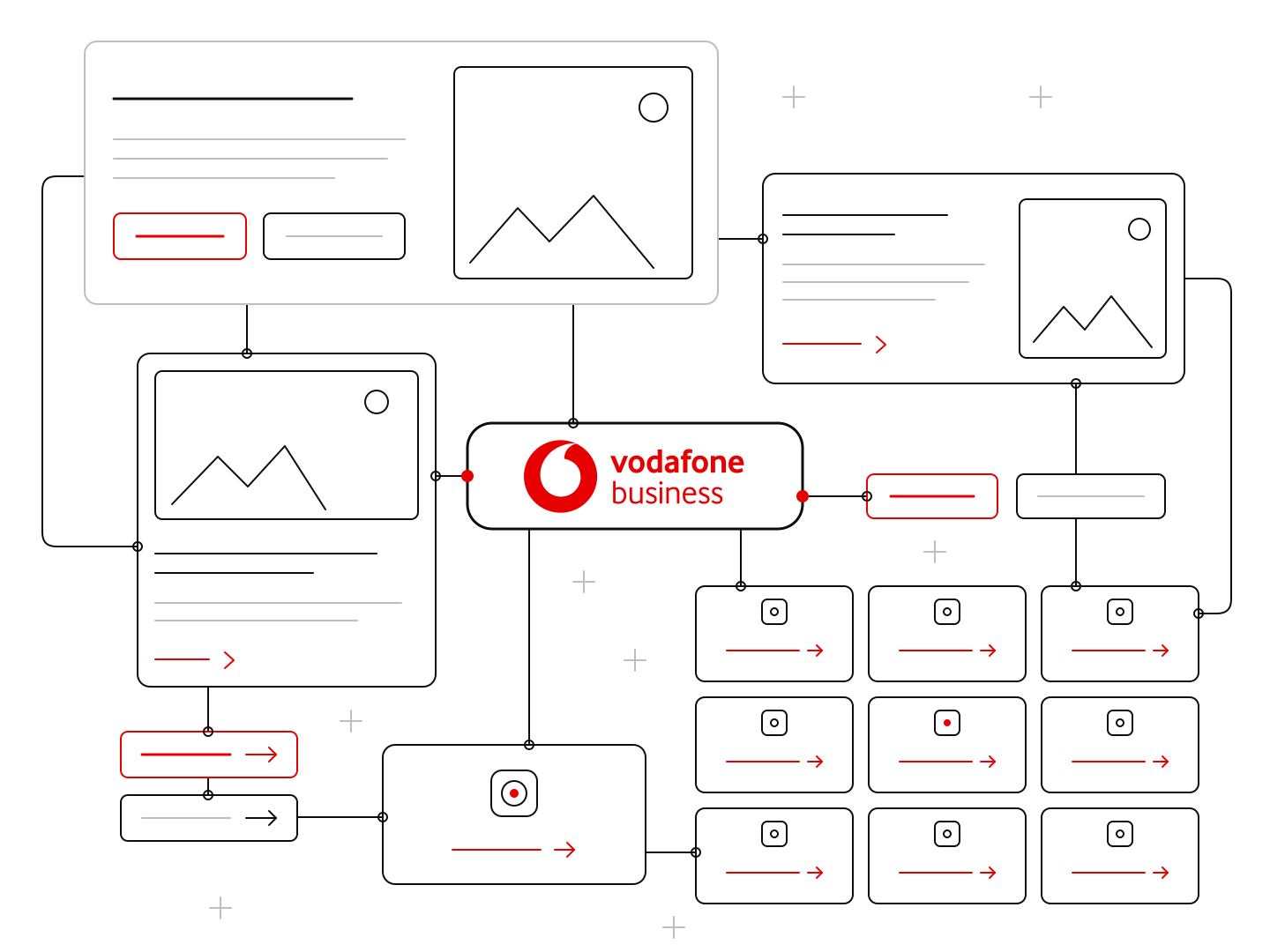
I put the pages together from the brand guidelines, the raw copy I was handed, and the business-site design system I was also looking after.
Moving across
After five years on the marketing side of VOIS I wanted something different. I'd always cared about what sat behind the screen as well as the visuals on it, and I'd helped the web team out when they needed an extra pair of designer hands, so I knew the work, and the challenges on the coding side intrigued me. I knew the people there too, and the senior UX designer, and we had a good working relationship. When that role opened up and they wanted to fill it internally, I put my hand up and moved across.
Where the work came from
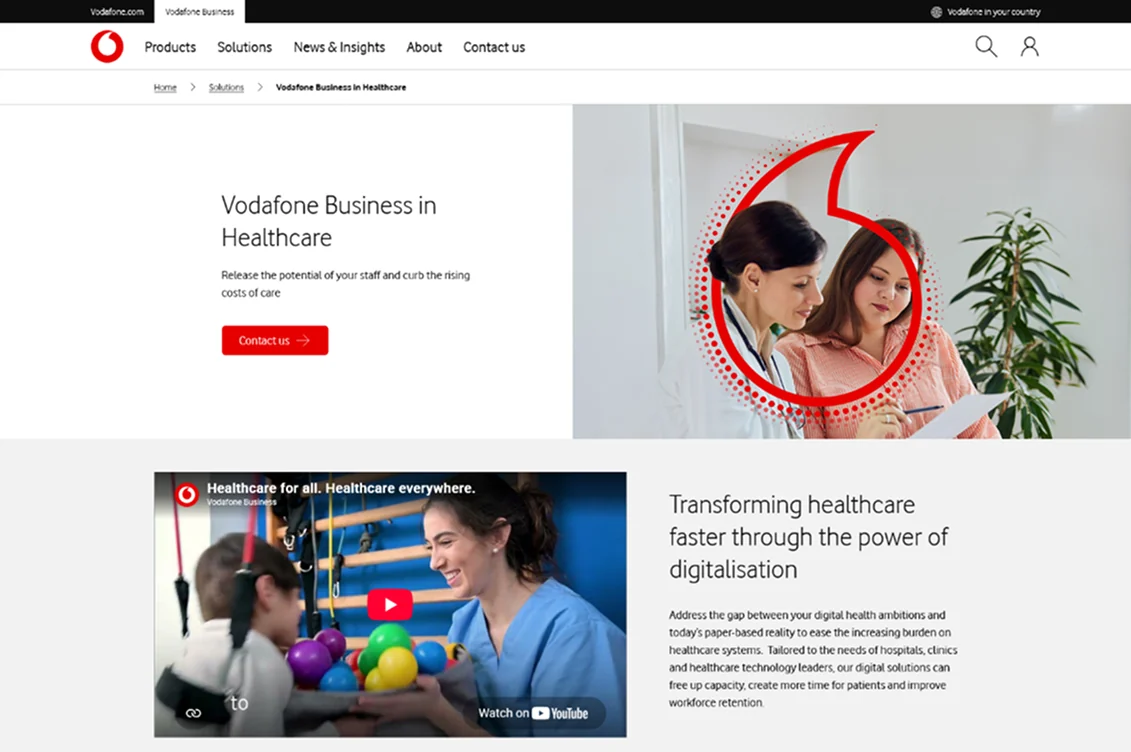
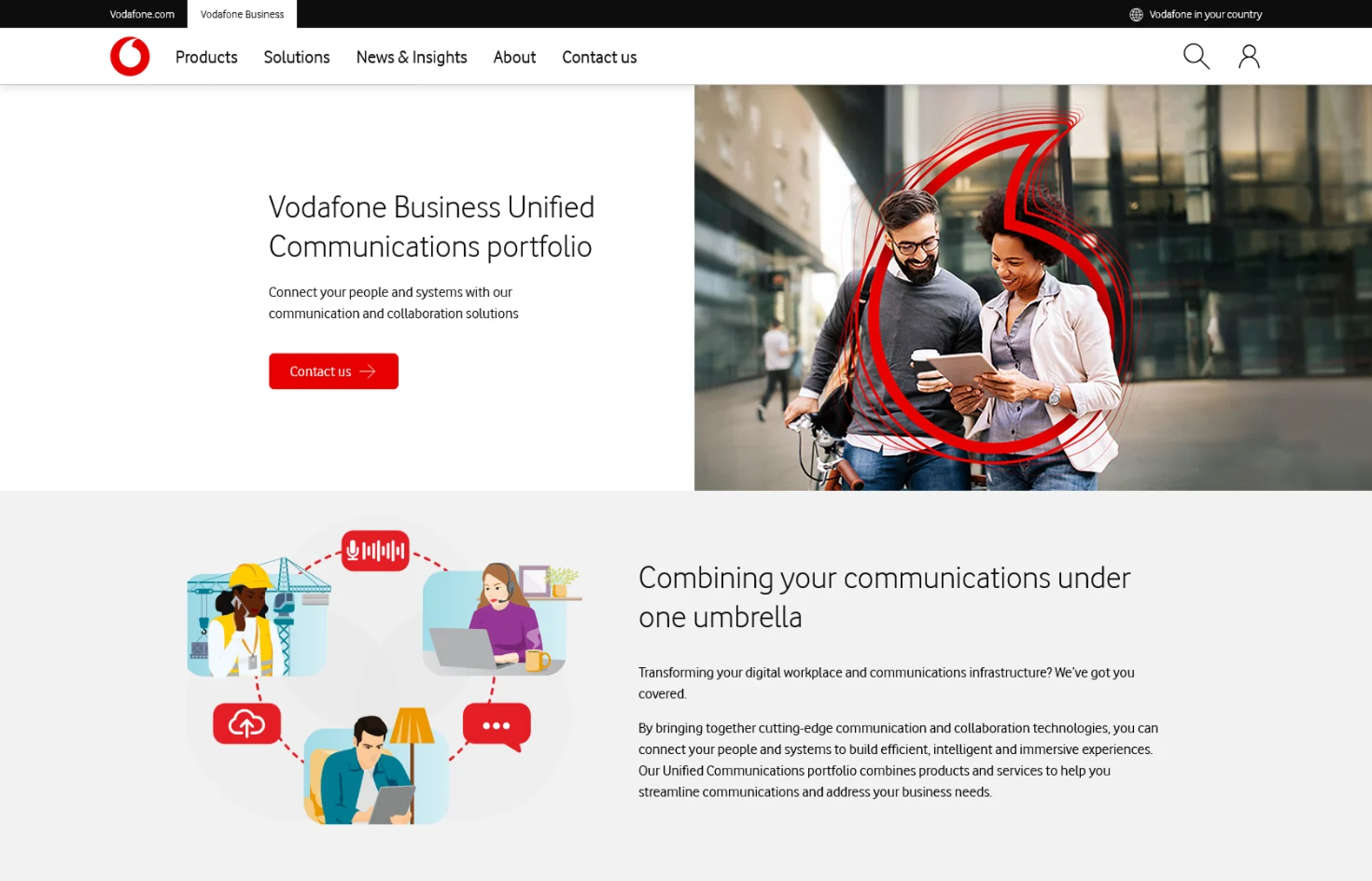
The main job was the pages under vodafone.com/business. A product manager in the UK would have a new product that needed a page, or an existing product would get a new feature and its page had to catch up.
The copy came to me as a Word document and I built the page around it, which components it was made from, what order the sections went in, how the images sat, how the whole thing came together.
A lot of the older pages sat there untouched unless someone had a reason to flag one, so it wasn't a maintain-everything job. I was the person who could take any business page and sort it out.
The library
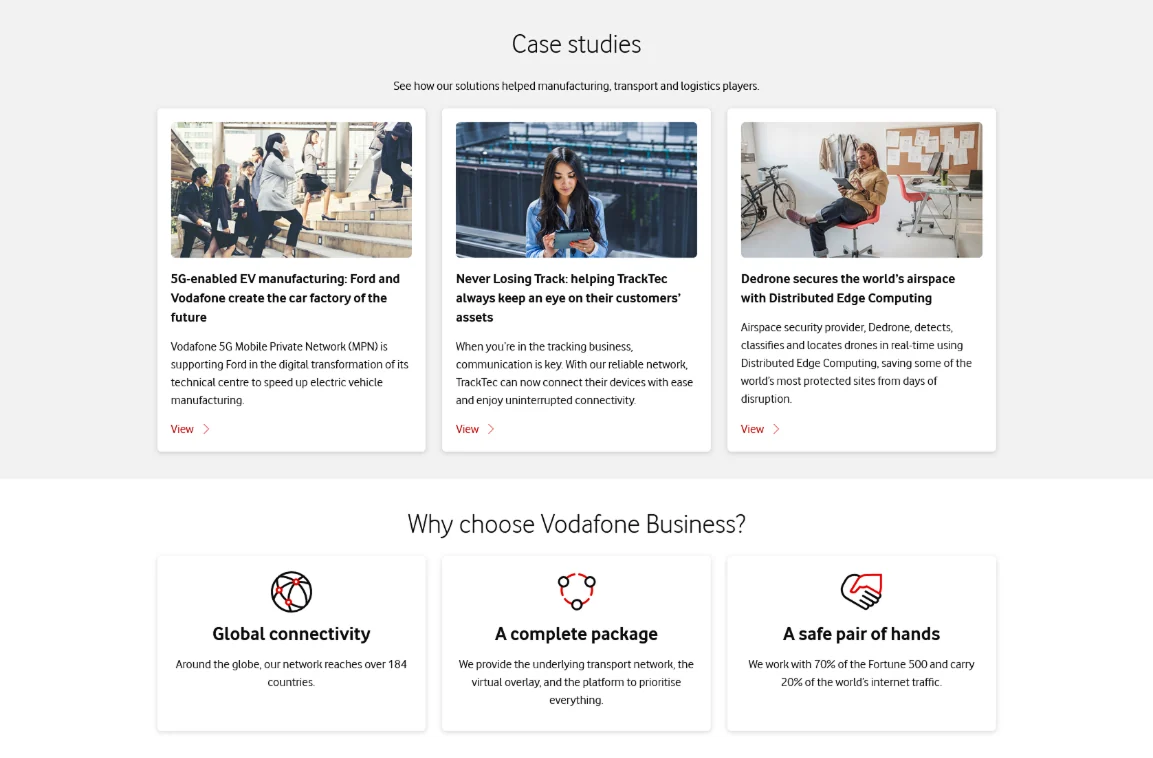
I designed the pages in Adobe XD, working from our business-site design system. That was a library of the usual things a marketing site needs, buttons, cards, image and video blocks, benefit and stat sections.
It was never as deep as a real product design system. There were no data tables or heavy components. The foundations were there, the colours, fonts and spacing, but they weren't tokenised the way a modern one would have them.
How it got built
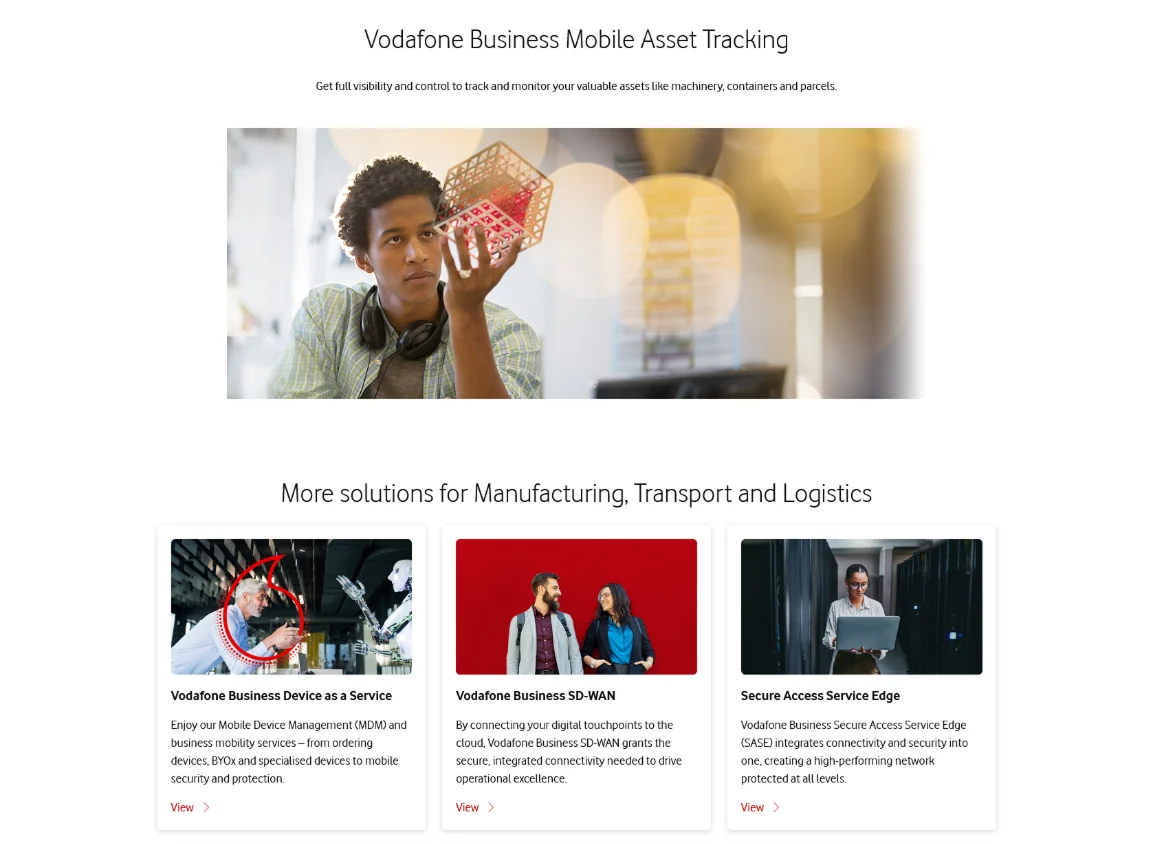
Once a design was done I handed it to an engineering team. They built the page by matching each component to its existing code snippet and taking the name, position and size from the Adobe XD export. They didn't write anything new.
If I wanted to add a new component to the design system, or make a variant that didn't exist yet, I designed it and passed that to a different engineering team who wrote the code for it. So the design was mine, and two separate engineering teams did the assembling and the building.
Inheriting the system
I inherited the design system along with the site. The senior had already left by the time I moved across, so from the start I was the only one looking after it and adding to it when something new came up.
The brand set the hard limits. The colours are fixed the way they always are at a company that size, Vodafone red is Vodafone red, and a lot of the page patterns were already tested and settled, like which sections belong near the top. What I had room in was how a page got put together from the parts.
I was the only designer on the team, so mine was the only design voice in the room.
The Living Speechmark
The big one came in 2022. Vodafone moved to the Living Speechmark, and we had the new brand in hand before it went public so the site overhaul could be prepared for it. Up to then the work had arrived a page at a time. This arrived all at once, the whole look and feel moving from the old visuals across to the new, new hero banners, new icons, structural changes to the pages themselves, and all of it on top of what was already coming in.
Brand oversight was part of the job too. I knew it well enough by then, the colours, the imagery, the spacing, that I was usually the one guiding stakeholders and partners on the web side, keeping what went onto the business site inside it.
Leaving
In 2022 the team was absorbed into the wider UX umbrella and a different part of the company took over the whole site. That was the end of our team, and I left that summer.
Those two years were the first time a system was mine to look after instead of something I worked inside. I went to TOPdesk in August, onto a design system that was only just starting.