The market was all the European countries that had no designer of their own.
One campaign could turn into dozens of finished files, built again for every size and every language.
- Role
- Web/Product Designer
- Timeline
- Five years, 2010–2015
- Team
- Around nine designers in Budapest, work divided by IP
- Sites
- Disney.co.uk, Disney Channel, Disney XD, Disney Junior, Games and Movies
The guidelines left very little open, and a lot of the job was keeping to them exactly, on our own work and on everyone else's.
The setup
I joined the Budapest branch in early 2010. The bigger markets had their own designers, the UK, France, Spain, Germany, and everything else came to us. The UK was a bit different. The brand team sat there and looked over what we made, so we always built the English version first and every other market came off that.
Building the packs
The work ran off the release schedule, a new film, a series, a game, an event at the parks. The US sent the raw material, the character cutouts, the backgrounds, the logos, and we built the online and offline assets each market needed out of it, across every placement and size.
Then the whole set again, for every language the campaign ran in. A pack wasn't finished until every size was there and every localised logo and every bit of localised text sat on it properly. That was most of the job.
How the work was split
We split the work by IP instead of by country. One person would get an Iron Man film, someone else an animated release, someone else a parks event, and they'd do the whole localised set for it. So a title stayed with one person, start to finish, in every market it ran in.
Six brands, one set of rules
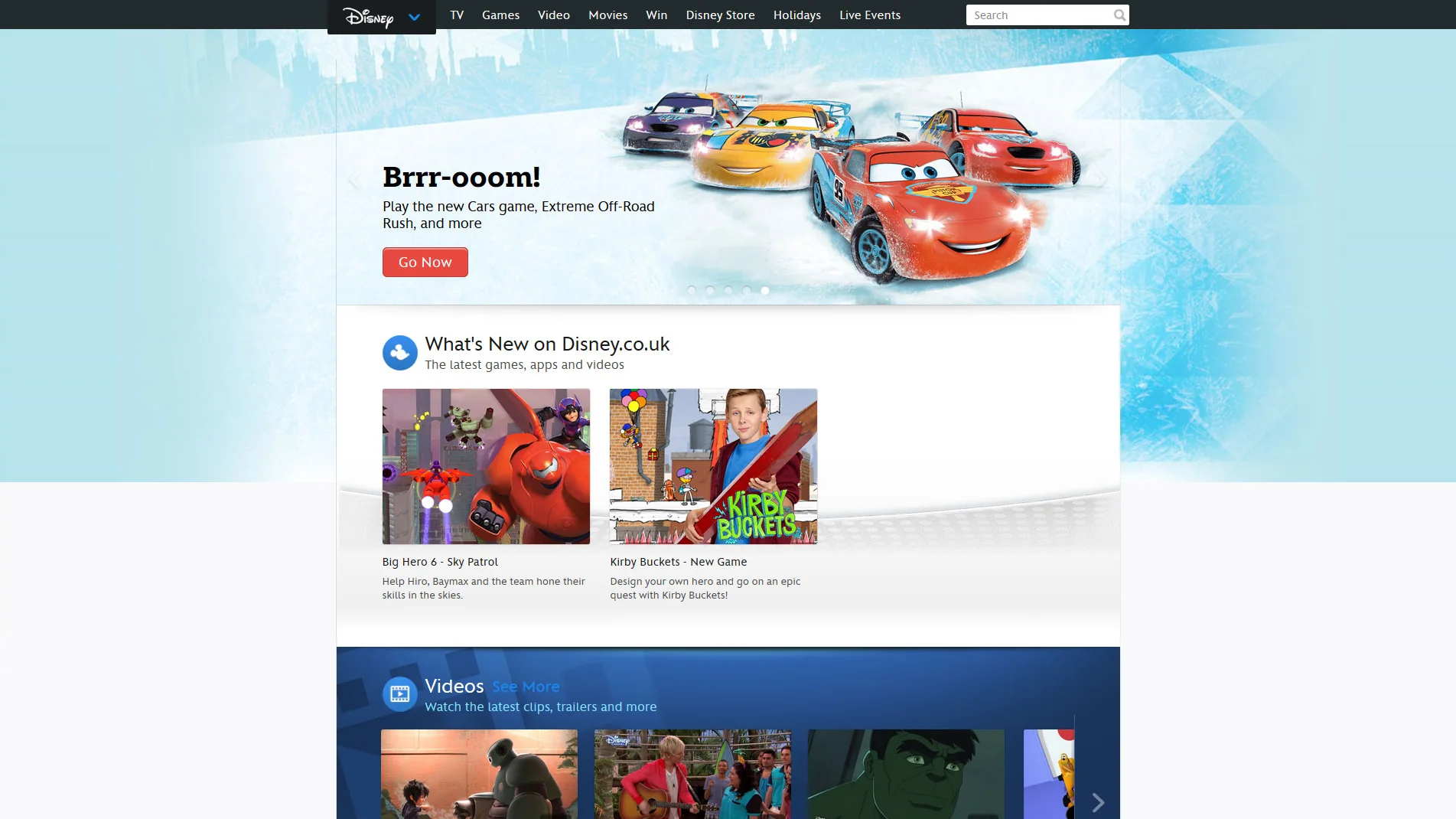
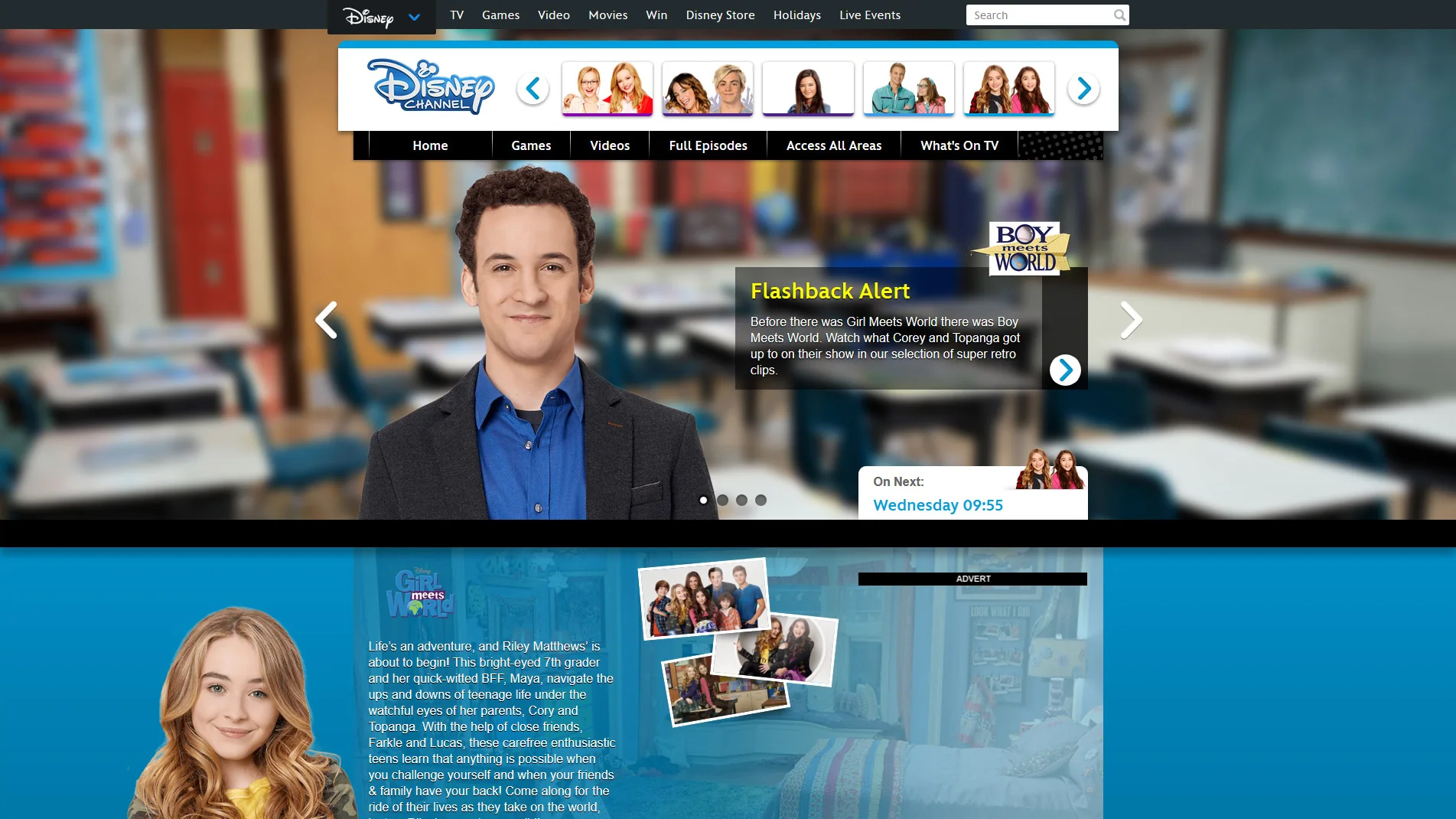
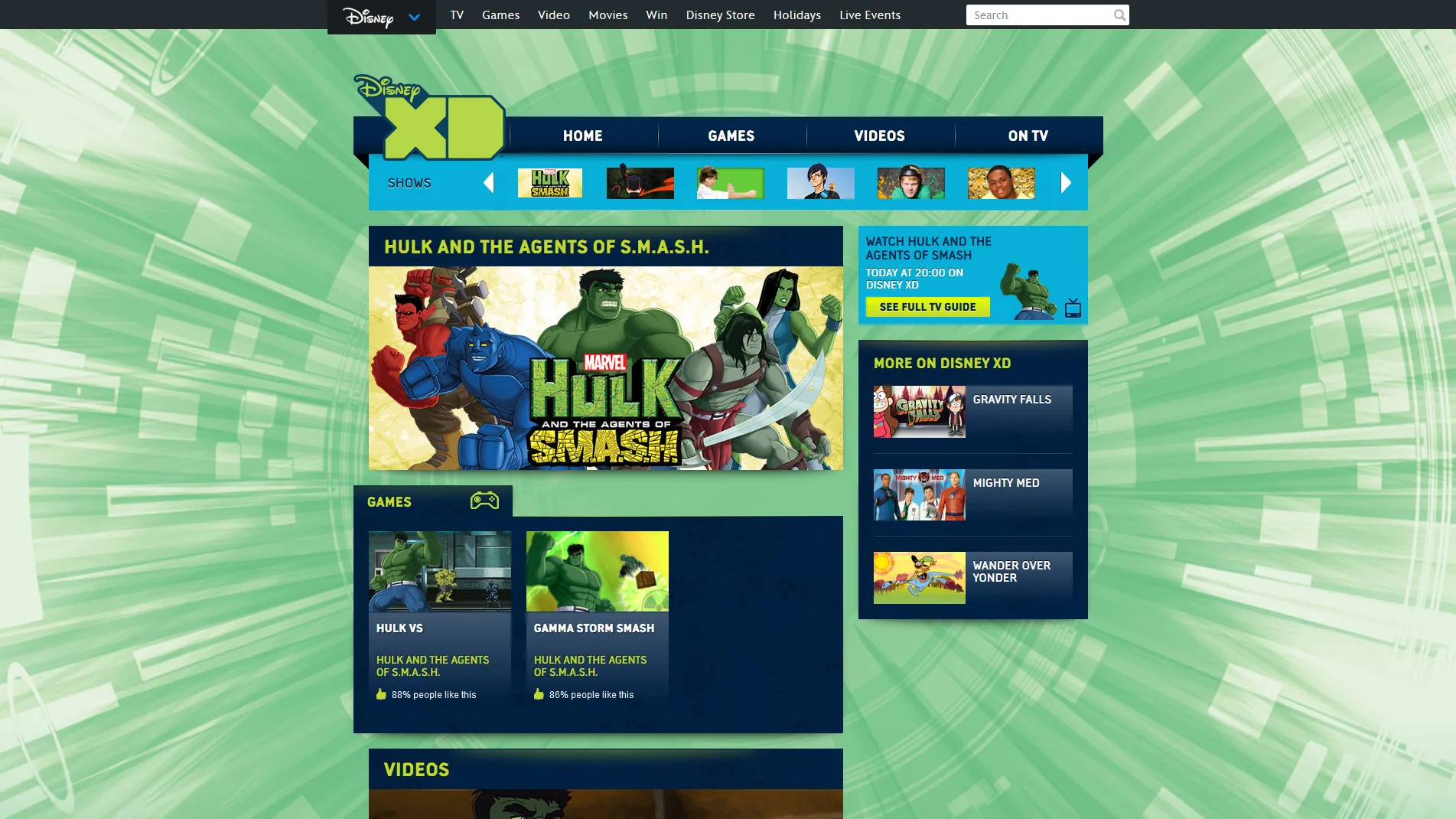
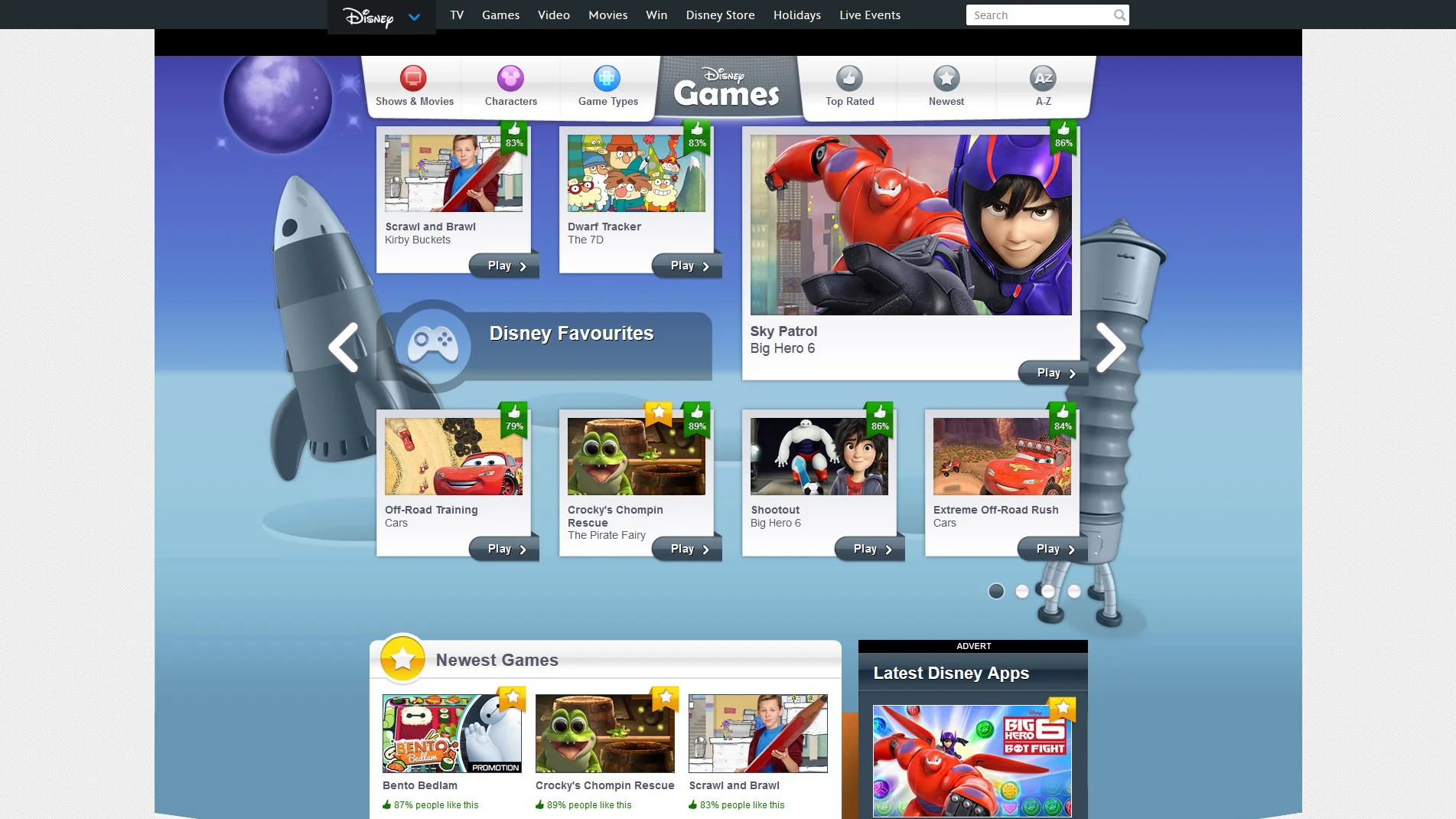
Every property looked like its own thing. XD is loud, aimed at boys. Disney Junior is soft and full of characters, for the smallest kids. Games is built around playing something. The main site is the front door to all of it. But the same navigation bar sits on top of every one, and the same rules run underneath, down to the colours, the fonts and the spacing.
The guidelines, and everyone who had to follow them
We worked as a pool, so whoever had a gap picked up brand checking. That meant going through things partners had made, cinema posters, licensed clothing, merchandise, and checking it all against Disney's guidelines. And being around to run a brand session if a partner needed someone to walk them through it.
The shift
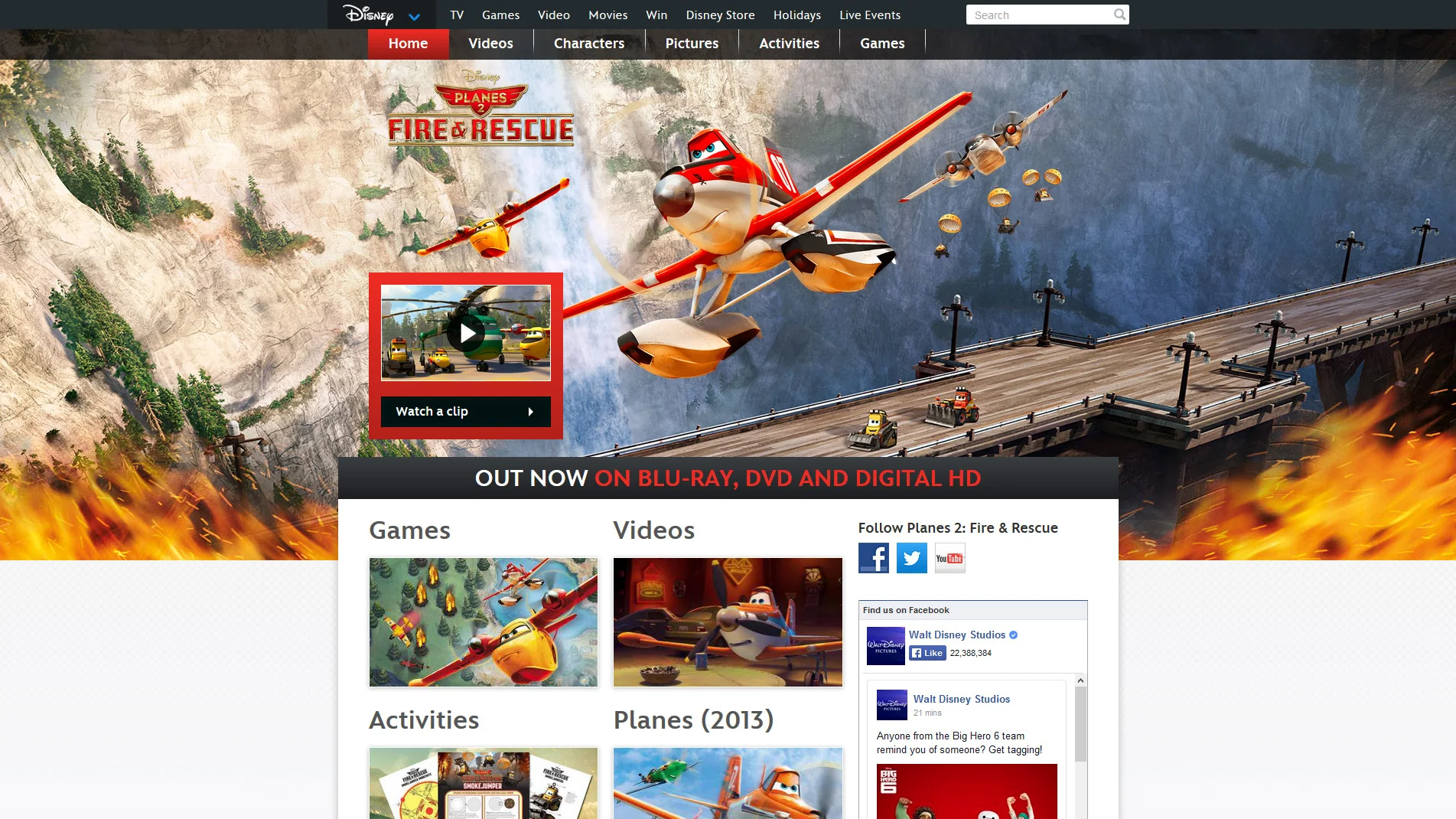
The brand moved twice while I was there, each time changing the look and feel, the page structure and the logo lockup.
The way the pages were built changed too. When I started the sites were part Flash, part HTML, with the text burned straight into the images, which is why every language needed its own flattened version. By 2013 or 2014 the Flash was gone, the sites had moved to responsive HTML5, and the content ran from the CMS instead of being baked into the artwork.
It's also what finished the team. Once the text and the logos weren't burned into the image, a market didn't need any design work past the master file. One designer builds the master, the CMS does the rest. A design team of nine wasn't something the work needed anymore. In 2015 the designers went, and the product managers attached to our work, and the rest of the office carried on. That's when I left.
What it left me with
Five years of keeping one brand in one piece across six properties and every market that didn't have someone of its own, at every size an asset came in.
It's the same work I've done since. Vodafone was a component library instead of a banner pack. TOPdesk was the same thing again with a design system around it.